September 30, 2026
Flagstaff Neighborhoods in 2026: Where to Live and What It Costs
A data-driven tour of Flagstaff's main residential areas, with current, sourced price data and an honest read on the character of each one.
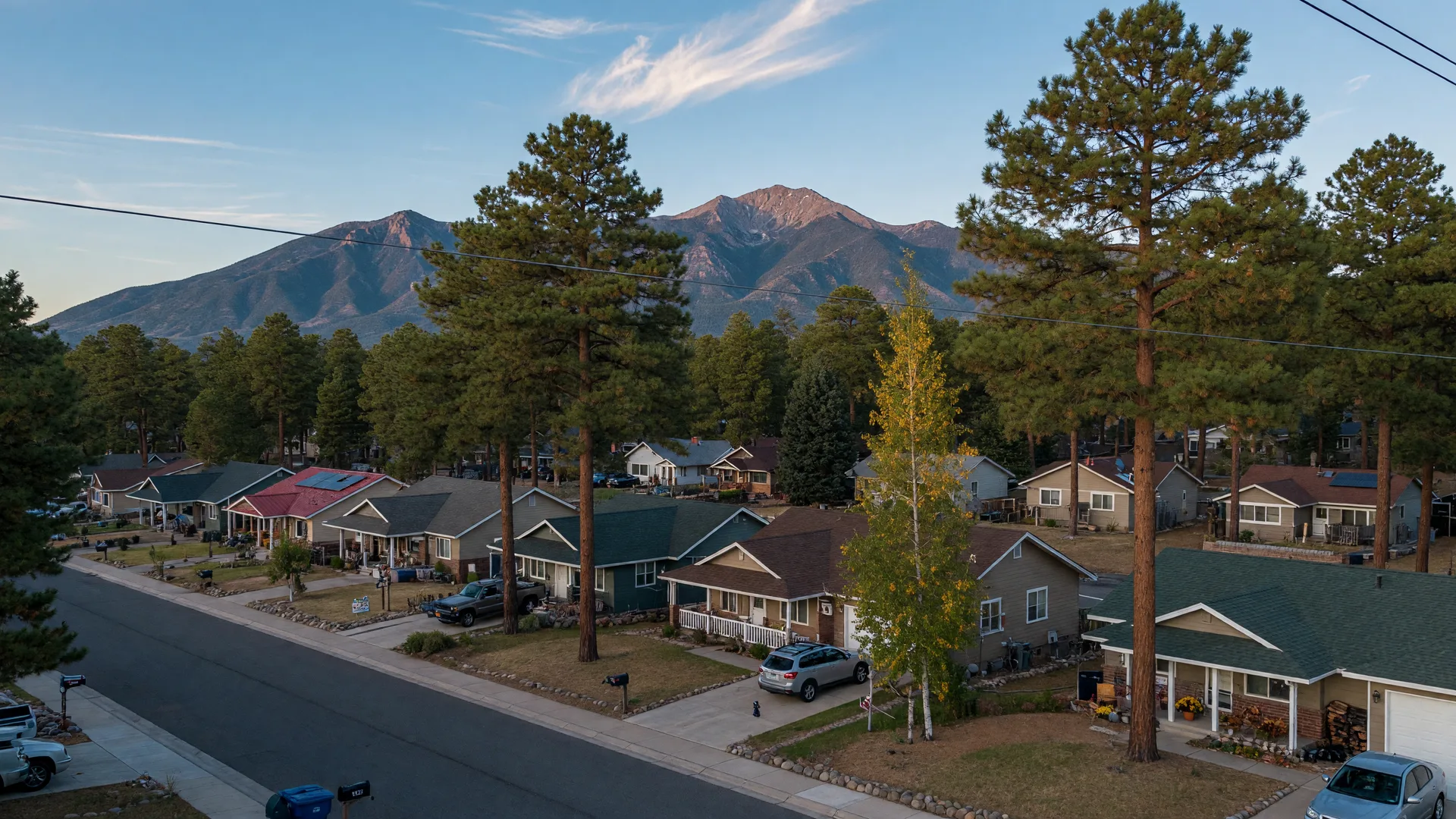
In Flagstaff's 2026 market, where you buy matters almost as much as what you pay. This guide breaks down the city's main residential neighborhoods, from the walkable streets around downtown to the forested communities at the edge of town, with current price data and an honest profile of each area. Figures come from published market trackers active as of late September 2026; because the sources differ in methodology and timing, treat them as directional rather than directly comparable.
The citywide picture first
Before comparing neighborhoods, it helps to know where the whole market stands. Published trackers active in September 2026 put Flagstaff's median sale price near $700,000 (Redfin, August 2026, roughly flat year over year), while trackers that count recent closed sales report lower medians, around $660,000 (Resideline, September 2026). Homes averaged about 53 days on market in August 2026 (Houzeo), with Zillow tracking pending status in about 17 days. Months-of-supply readings near 3.0 lead Redfin, Houzeo, and Arizona Homes & Condos to describe the market as balanced or neutral: neither a strong seller's market nor a strong buyer's market, with modest concessions available to buyers.
One more number frames everything else: Flagstaff sits at roughly 6,900 feet of elevation, and the Census Bureau's most recent estimate put the city's population near 77,260. Northern Arizona University enrolled 27,184 students in fall 2025. University-driven demand, tourism, and limited buildable land are the reasons prices here behave differently from the rest of Arizona, and they shape every neighborhood below.
Downtown and Southside: walkable, historic, and compact
Downtown Flagstaff is the historic core: Heritage Square, Wheeler Park, the Visitor Center, and the restaurants and breweries along Route 66. The Southside sits just south of downtown, known for its food scene, murals, and community events. Both are the most walkable parts of the city and the closest to Northern Arizona University, which makes them student-friendly and keeps rental demand steady.
The trade-offs are real: older homes and condos, limited parking, and less square footage for the money. JVM Lending's 2026 forecast put the median price for the Downtown and Southside area near $620,000. Buyers who want to walk to dinner, work, or campus and are willing to accept a smaller footprint will find the most urban lifestyle Flagstaff offers.
University Heights: family-friendly and close to NAU
The University Heights and Highlands area, just south of the campus, is mostly single-family homes with some townhomes and apartment-to-condo conversions. It is one of the most desired areas for families, with a mix of modern and older homes on tree-lined streets, and it consistently draws investor interest because of its proximity to a university of more than 27,000 students.
Homes.com reported an average home value near $786,669 for the area, with recent listings in the $675,000 to $750,000 range. Expect competition here: good inventory turns quickly, and the rental market underneath it is strong.
Cheshire: quiet, wooded, and on the way to the Grand Canyon
Cheshire sits on Flagstaff's northwest side off Highway 180, the route toward the Grand Canyon. It is a quiet, heavily wooded neighborhood with hiking and biking trails, close to Arizona Snowbowl, and generally family-oriented, with a median age around 44. It sits in the Sechrist Elementary boundary, one of the district's strong performers, which is a major draw for families.
Homes.com listed a median home price near $679,000 for Cheshire, with a 12-month median sale price around $675,000; Redfin's three-month median was higher, near $702,000, down about 17 percent year over year. There are few businesses within the neighborhood itself, so most errands mean a drive into town. The payoff is forested privacy and quick access to the mountains.
Greenlaw Estates: established east-side value
The Greenlaw subdivisions on Flagstaff's east side date mostly from the 1960s and 1970s, with sturdy masonry homes plus later townhomes. The area has its own shopping and restaurants, a branch library, schools, and the east campus of Coconino Community College, and it sits close to Bushmaster Park and Coconino National Forest access.
NeighborhoodScout reported a median real estate price near $592,792 for the Greenlaw Estates area, making it one of the more attainable price points in the city. It is a mixed owner and renter community with a close-knit feel, and for buyers who want established neighborhoods, mature trees, and more space per dollar, it is worth a serious look.
Ponderosa Trails: newer homes on the southwest side
Ponderosa Trails is one of Flagstaff's newer neighborhoods, with most homes built in the early 2000s, a mix of single-family homes and townhomes, and an HOA. It sits on the southwest side near Fisher Point, Marshall Lake, and Lowell Observatory's Perkins Telescope, with outdoor recreation close by.
It is also one of the pricier neighborhoods in this guide. Redfin reported a median sale price near $896,500 in February 2026, up about 18 percent year over year, while Homes.com listed a median sale price near $822,500. Buyers pay a premium for newer construction, HOA amenities, and the southwest-side location, and the recent price run-up is worth watching closely.
Kachina Village: the most affordable entry point
Kachina Village is a wooded community about 10 miles south of downtown Flagstaff, just off Interstate 17, surrounded by Coconino National Forest ponderosa pines. It has its own park, trails, and the 128-acre Pumphouse County Natural Area, and it carries strong vacation-rental appeal.
ASREB reported an average home value near $440,000 for Kachina Village, with roughly 4.6 percent year-over-year growth, making it the most affordable entry point in this guide by a wide margin. The trade-off is the commute: daily trips to Flagstaff's jobs, schools, and downtown mean a regular drive up the interstate, and buyers who want the city's amenities at their doorstep should weigh that carefully.
How to choose: match the area to how you live
Flagstaff's neighborhoods reward matching the area to your actual routine. A few questions help narrow the field:
- Where do you need to be daily? Work, school, and campus commute times separate downtown and University Heights from Kachina Village and Cheshire more than price does.
- Which school boundaries matter to you? Boundaries vary sharply by neighborhood. Cheshire's Sechrist boundary is one of the district's strongest draws; confirm current assignments before you commit.
- HOA or no HOA? Ponderosa Trails and several newer communities carry HOAs; older areas like Greenlaw and parts of the Southside do not. The trade-off is amenities and rules versus freedom and fees.
- Do you want rental income potential? Proximity to NAU drives the strongest rental demand, which is why University Heights and downtown consistently attract investors.
- How much maintenance do you want? Newer construction in Ponderosa Trails differs from 1960s masonry in Greenlaw in more ways than price, and the condition of each individual home matters more than the neighborhood average.
For a deeper, area-by-area read, the Flagstaff neighborhood guides on this site cover the communities in plain language, and the moving to Flagstaff guide walks through altitude, seasons, schools, and lifestyle for newcomers.
The bottom line
In 2026, Flagstaff's neighborhoods span a wide price band, from average values near $440,000 in Kachina Village to medians above $890,000 in Ponderosa Trails, with Downtown, University Heights, Cheshire, and Greenlaw spread across the middle. The market overall is balanced, with roughly three months of supply and homes selling in weeks rather than days in the most sought-after areas.
The right neighborhood is the one that fits your commute, your schools, your budget, and your tolerance for HOA rules and home maintenance. That is a conversation, not a spreadsheet. If you are weighing areas in Flagstaff or Northern Arizona, Mike Konefal has lived here for 26 years and knows the character of every one of these communities firsthand.
Sources
- Redfin, "2026 Flagstaff Housing Market" (redfin.com)
- Resideline, "Flagstaff, AZ Housing Market 2026" (updated September 6, 2026) (resideline.com)
- Houzeo, "Flagstaff, AZ Housing Market in 2026" (houzeo.com)
- Zillow, "Flagstaff, AZ Housing Market" (zillow.com)
- Arizona Homes & Condos, "Flagstaff Arizona Real Estate Market Report, July 2026" (arizonahomesandcondos.com)
- JVM Lending, "Flagstaff Real Estate Market Forecast for 2026" (jvmlending.com)
- Homes.com, "University Heights-Highlands Neighborhood" (homes.com)
- Homes.com, "Cheshire Neighborhood, Flagstaff" (homes.com)
- Redfin, "Cheshire, Flagstaff Housing Market" (redfin.com)
- NeighborhoodScout, "Upper Greenlaw Estates" (neighborhoodscout.com)
- Redfin, "Ponderosa Trails, Flagstaff Real Estate" (redfin.com)
- Homes.com, "Ponderosa Trails Neighborhood" (homes.com)
- ASREB, "Best Neighborhoods in Flagstaff for Real Estate Agents" (asreb.com)
- NAU Institutional Research, "Quick Facts" (Fall 2025) (in.nau.edu)
- U.S. Census Bureau, "QuickFacts: Flagstaff city, Arizona" (census.gov)
- Best Flagstaff Homes Realty, "A Local's Guide to Flagstaff Neighborhoods" (bestflagstaffhomes.com)
Neighborhood price figures come from different sources and dates and are not strictly comparable. Market data changes frequently; figures above reflect the most recent published data at the time of writing and are provided for information only, not as an appraisal or a guarantee.

Mike Konefal
Commercial Real Estate Agent · Coldwell Banker Northland Realty
Questions about Flagstaff neighborhoods, pricing, or a property search? Contact Mike for a conversation about your situation.
Contact Mike Konefal