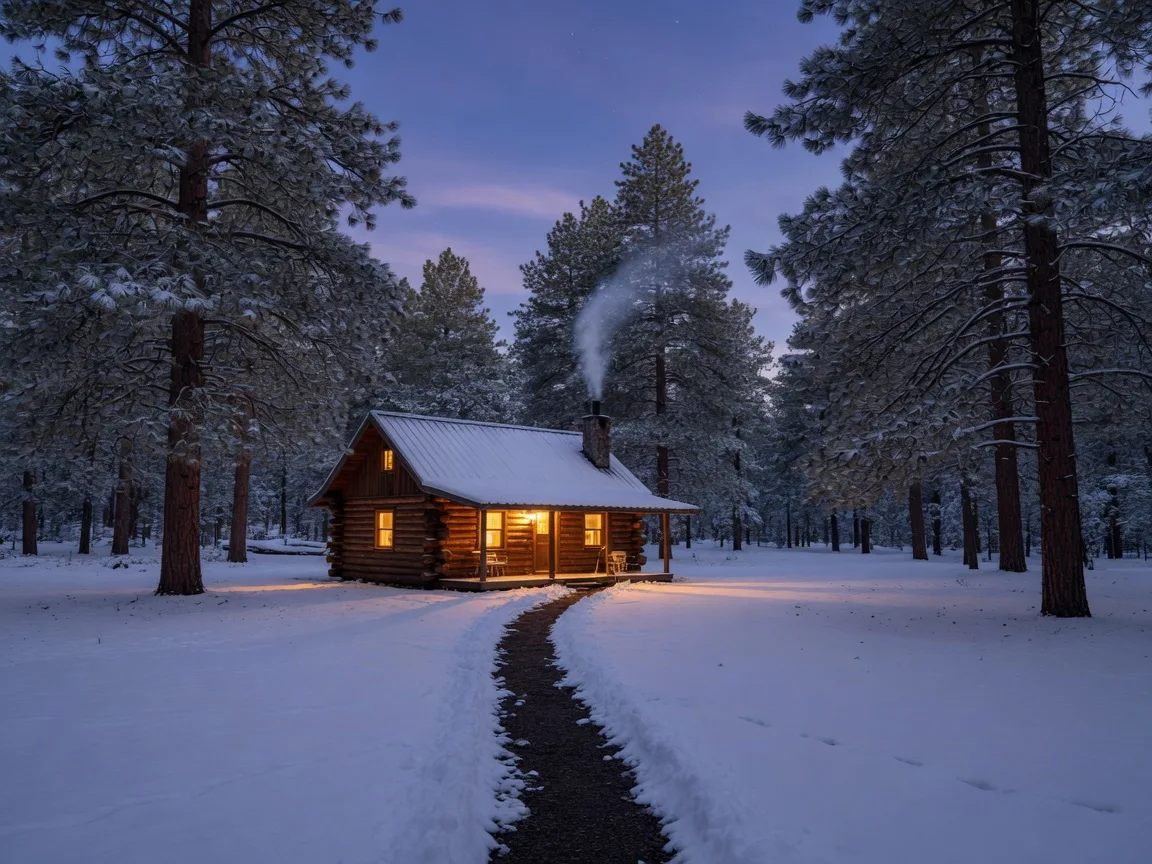
Moving to Flagstaff · Northern Arizona
Everything relocating families, workers, and investors ask before they move: what living here is really like, what it costs, how much snow falls, where the jobs are, and which communities fit which lifestyle. Answers first, sources cited, written by a 26-year Flagstaff resident.
What people search
Plan for altitude, four real seasons, an average of about 90 inches of snow a year, a cost of living roughly 16 percent above the national average, and a competitive housing market. Flagstaff is a mountain city of about 77,260 people (U.S. Census Bureau, July 2025 estimate) sitting on a plateau around 7,000 feet at the base of the San Francisco Peaks, where ponderosa pine forest, Historic Route 66, and the Northern Arizona University campus shape daily life.
The arrival checklist is short but real: give yourself a few days to adjust to the altitude, set up utilities before move-in day, understand the winter parking rules before November, and start your home search early because inventory is limited and well-priced homes move. For current prices and availability, start with our Flagstaff market report and active listings.
Sources: U.S. Census Bureau QuickFacts (Flagstaff city, July 2025 estimate) and NOAA/NWS climate records for Flagstaff, accessed September 10, 2026.
Flagstaff sits at the junction of Interstate 40 (east-west) and Interstate 17 (south from Phoenix). Flagstaff Pulliam Airport (FLG), about 5 miles south of downtown, is served by American Airlines with daily flights to Phoenix and Dallas-Fort Worth plus seasonal service to Los Angeles, making it the closest commercial airport to the Grand Canyon. Amtrak's Southwest Chief stops daily in both directions at the historic downtown station on Route 66, connecting Flagstaff to Los Angeles and Chicago.
Sources: flyflagstaffaz.com airline information and Amtrak station guide, accessed September 10, 2026.
~7,000 ft elevation
Thin, dry air and four distinct seasons. Hydrate, take it easy the first days.
~90 in. snow
NWS 1991-2020 average. Snow tires or AWD make winter driving easier.
~$700K median
Citywide median sale price range; see the market report for today's numbers.
What people search
Living in Flagstaff means four distinct seasons in a small mountain city of about 77,260 people, with ponderosa pines replacing the desert most people picture when they think of Arizona. The city records about 266 sunny days a year (BestPlaces and Discover Flagstaff), summers are mild with afternoon monsoon storms from July into September, and winters bring snow measured in feet rather than inches. Northern Arizona University gives the town a college energy, and downtown Flagstaff's Historic Route 66 core is genuinely walkable, with coffeehouses, breweries, galleries, and the farmers market within a few blocks.
Sources: U.S. Census Bureau QuickFacts (July 2025 estimate), BestPlaces and Discover Flagstaff climate data, and NWS monsoon records, accessed September 10, 2026.
For most people who value four seasons, outdoor recreation, and a genuine small-city community, yes. It is an especially strong fit for families (the school district and charters are solid, and the city is compact and relatively low-key), university faculty, staff, and students, healthcare workers, and remote professionals. The honest trade-offs are cost: living here runs about 16 percent or more above the national average, local wages trail the national average, winters are long, and the local job market is narrower than a metro area's.
The lifestyle highlight list is real: Arizona Snowbowl skiing about 15 minutes up the mountain, the Grand Canyon South Rim about an hour and a half away, Sedona's red rocks about 30 miles south, and national forest trails from your back door in many neighborhoods. Flagstaff also holds the distinction of being the world's first International Dark Sky City, which is why Lowell Observatory and the Flagstaff Star Party thrive here.
Flagstaff is largely a driving town, but it has options. Mountain Line runs nine fixed bus routes plus on-demand service around the city, with fares listed on its website. Citywide Walk Score is about 39, yet the walkable downtown neighborhoods (La Plaza Vieja, South Side, and Sunnyside) score far higher, so choose your neighborhood based on how often you want the car. Winter weather can close mountain roads and delay Interstate 40 occasionally, so check conditions before long drives.
Sources: Mountain Line transit agency and Walk Score (Flagstaff), accessed September 10, 2026.
~266 sunny days
BestPlaces and Discover Flagstaff, accessed September 2026.
July highs low 80s
Average July high about 82-83 degrees per BestPlaces and Weather Atlas.
What people search
The short version: Flagstaff trades a higher cost of living and real winter for four gorgeous seasons, abundant snow, cool summers, and unmatched outdoor access. Here is the balanced list a local would give you.
Pros
Cons
The things that surprise newcomers most: you cannot park on city streets overnight from November 1 to April 1 (the winter parking ordinance runs midnight to 7 a.m., with towing in snow), you will shovel sidewalks within 24 hours of a storm and cannot push snow into the street, and the altitude genuinely affects sleep, stamina, and even cooking times at first. Housing competition is real: inventory is constrained by national forest land and mountain geography, so well-priced homes sell fast. Some summers bring wildfire smoke, and August afternoon monsoons arrive like clockwork. None of these are deal-breakers, but they are the details online booster lists usually skip.
Sources: City of Flagstaff winter parking ordinance and safe sidewalk code, accessed September 10, 2026.
What people search
Yes. BestPlaces scores Flagstaff's cost of living at 116.2 against a national baseline of 100 (about 16 percent above average), and AreaVibes estimates it about 29 percent above. Housing carries almost all of the premium: AreaVibes puts Flagstaff's housing index around 178, far above the national 100, while groceries, utilities, and transportation sit much closer to national norms. The citywide median home sale price has hovered near $700,000, so shelter is the budget line that moves everything else.
Sources: BestPlaces and AreaVibes cost-of-living indices for Flagstaff, AZ, accessed September 10, 2026.
The published numbers frame it: the median household income in Flagstaff is about $68,000 to $71,500 depending on the ACS vintage, while the median home price sits around $700,000. A conventional purchase at that level generally requires a substantial down payment and a household income comfortably above the local median, which is why many newcomers rent first and buy once they know the area. As a general lender guideline, plan for housing costs near 30 percent or less of gross income, and expect utilities, groceries, and fuel to run a bit above national averages. For today's prices and rates, check our Flagstaff market report.
Sources: U.S. Census Bureau ACS median household income (2023 and 2020-2024 vintages) via DataUSA, accessed September 10, 2026.
Flagstaff is the more expensive city. BestPlaces reports Phoenix is about 8.4 percent cheaper than Flagstaff overall, and Apartments.com estimates Phoenix's cost of living is about 12.1 percent lower. Housing drives most of the difference: Phoenix's median home cost sits well below Flagstaff's, and rents follow the same pattern. What the premium buys is climate: Phoenix summers regularly top 100 degrees while Flagstaff's July highs average in the low 80s, plus snow, pines, and four seasons.
Sources: BestPlaces Phoenix vs Flagstaff comparison and Apartments.com cost-of-living comparison, accessed September 10, 2026.
What people search
There is no single "best" neighborhood in Flagstaff. The right area depends on how you actually live: whether you want to walk downtown, which schools you want near, how long a commute you will accept, and whether you prefer a historic home, a modern subdivision, or a forest lot. Match the character to the routine.
The snapshot: Downtown Flagstaff is the walkable historic core with condos and older homes; the University area hugs the NAU campus; Sechrist draws families to its school area; East Flagstaff holds newer subdivisions with more house for the money; Cheshire offers family neighborhoods at the base of the San Francisco Peaks; and Kachina Village delivers wooded, quieter living south of town. Each one has a full profile in our Flagstaff Neighborhood Guides, written with the honest, verifiable detail a local agent would give.
If you want acreage, county roads, and a rural feel instead of city services, the communities around Flagstaff (Doney Park, Kachina Village, Mountainaire, Bellemont, Munds Park, Parks, Fort Valley, and Williams) are covered in Section 9 below.
What people search
Published ranges put Flagstaff's median sale price at roughly $700,000 to $710,000 for all home types (Redfin, June to July 2026: a three-month median of $710,000 in June and $701,649 in July), with the MLS-based July 2026 monthly median at $705,000. The average sale price came in around $695,000. Different sources, property types, and time windows produce different numbers, so the honest answer is a range, not a single figure. Follow our Flagstaff market report for the current numbers, and the buyer's guide for how to use them.
Sources: Redfin Flagstaff housing market pages (June and July 2026 data) and Flagstaff MLS full-year 2025 single-family report, accessed September 10, 2026.
Inventory in Flagstaff is limited: mountain geography and surrounding national forest constrain new development, so available homes for sale at any given time are relatively few, and well-priced properties in the median range draw multiple offers. Browse everything Mike currently has listed on our active listings page, and reach out for properties that fit your price and neighborhood before they hit the open market.
In broad strokes from 2025-2026 market data:
Below the median: a condo, a small townhome, or an entry-level single-family home. Supply at this level is very tight, so be ready to move quickly when the right unit appears.
Right at the citywide median: a modest, well-kept single-family home (often roughly 1,200 to 1,600 square feet in areas like the Eastside or West Flagstaff) or a roomier townhome. This was the most active buyer range in recent data.
The start of Flagstaff's luxury tier, which the Institute for Luxury Home Marketing benchmarked at $975,000 in January 2025. A million buys a larger, newer family home with more land or a stronger location.
These are guides, not promises: exact results vary by lot size, condition, updates, and neighborhood. For what each range is actually returning right now, ask Mike for a current list of comparable sales in the areas you like.
Sources: flagstaffplaces.com affordability analysis (2026), Northern Arizona housing market updates (2025-2026), and the Institute for Luxury Home Marketing benchmark, accessed September 10, 2026.
What people search
Flagstaff averages about 90 inches of snow per year per the National Weather Service's 1991-2020 climate normals at Flagstaff Pulliam Airport. Some local sources, including Coconino County, cite a higher figure of about 108.8 inches. Either way, Flagstaff is the snowiest city in Arizona and one of the snowiest in the United States, with snow typically arriving in November and lingering into April.
Sources: National Weather Service 1991-2020 climate normals and Coconino County snow removal information, accessed September 10, 2026.
Cold and snowy, with occasional very cold nights. From December through February, typical daytime highs run in the low-to-mid 40s Fahrenheit and overnight lows in the mid-teens to about 20 degrees. January is the coldest month, averaging a high near 43 and a low near 18, and sub-zero readings are not uncommon on the coldest nights. When storms arrive, the city's plows clear main arteries, bus routes, and school zones before residential streets, so patience is part of the routine.
Sources: National Weather Service Flagstaff climate data, accessed September 10, 2026.
~90 in. average snowfall
NWS 1991-2020 normals at Flagstaff Pulliam Airport. Source cited above.
Winter highs low-to-mid 40s
December-February; overnight lows mid-teens to about 20 degrees.
Not strictly, but it helps. Main roads are plowed and a front-wheel-drive car with good all-season or snow tires handles most Flagstaff days. During and immediately after storms, all-wheel or four-wheel drive and chains are recommended, and Discover Flagstaff notes they may be required in active snow. The road up to Arizona Snowbowl can require AWD/chains in winter. A basic winter kit (scraper, brush, blankets, shovel) is cheap insurance for mountain driving.
Sources: Discover Flagstaff road conditions and traffic guidance, accessed September 10, 2026.
Winter is a way of life, and the rules matter. The City of Flagstaff's winter parking ordinance bans on-street parking from midnight to 7 a.m., November 1 through April 1, where ticket enforcement applies when dry and towing during snow. Residents must clear sidewalks within 24 hours of a storm and cannot push snow from private property into the street. In exchange: ski days at Snowbowl a short drive up the mountain, starry nights, and the quietest, most beautiful season in the pines.
Sources: City of Flagstaff winter parking ordinance and safe sidewalk code, accessed September 10, 2026.
What people search
The largest employers are Northern Arizona University (about 2,571 employees), Flagstaff Medical Center (about 2,200), W.L. Gore & Associates (about 1,950), Flagstaff Unified School District (about 1,375), and Coconino County and the City of Flagstaff, with Aramark and the State of Arizona also in the top tier. Education, healthcare, advanced manufacturing, government, and tourism carry the local economy, with a notable research presence around Lowell Observatory and the observatory corridor.
Sources: Choose Flagstaff top employers (2025) and AZMAG Coconino County employer report (2023), accessed September 10, 2026.
The Bureau of Labor Statistics put Flagstaff's mean hourly wage at $29.44 (about $61,235 a year) in May 2025, below the national average of $33.54. Median household income is roughly $68,000 to $71,500 depending on the ACS year, which trails the national median. Higher-paying occupations include management (about $103,000), architecture and engineering (about $100,000), and computer and math roles (about $86,500), per the MIT Living Wage Calculator.
Sources: BLS Occupational Employment and Wage Statistics, Flagstaff MSA, May 2025, and MIT Living Wage Calculator, accessed September 10, 2026.
Run the numbers against the median: a median home near $700,000 with a median household income in the $68,000 to $71,500 range means most buyers need dual incomes, a large down payment, or a rental-first plan. For remote workers, Flagstaff is a strong fit: Optimum cable internet provides the broadest coverage with speeds up to about 940 Mbps, Quantum Fiber and CenturyLink offer fiber at many addresses, Wecom Fiber has been building a citywide multi-gig fiber network since April 2025, and T-Mobile, Verizon 5G home, and Starlink fill the gaps. Local wages running below the national average also means remote salaries go further here than the neighborhood median suggests.
Sources: CNET and HighSpeedInternet.com Flagstaff internet provider roundups, Broadband Map coverage data, and Wecom Fiber-City of Flagstaff construction announcement, accessed September 10, 2026.
5.8%
Coconino County unemployment rate, July 2026, per BLS/FRED. Rates ranged from 4.5% to 6.0% through mid-2026.
$61,235
Mean annual wage, Flagstaff MSA, May 2025, per BLS. The U.S. average was $69,763.
What people search
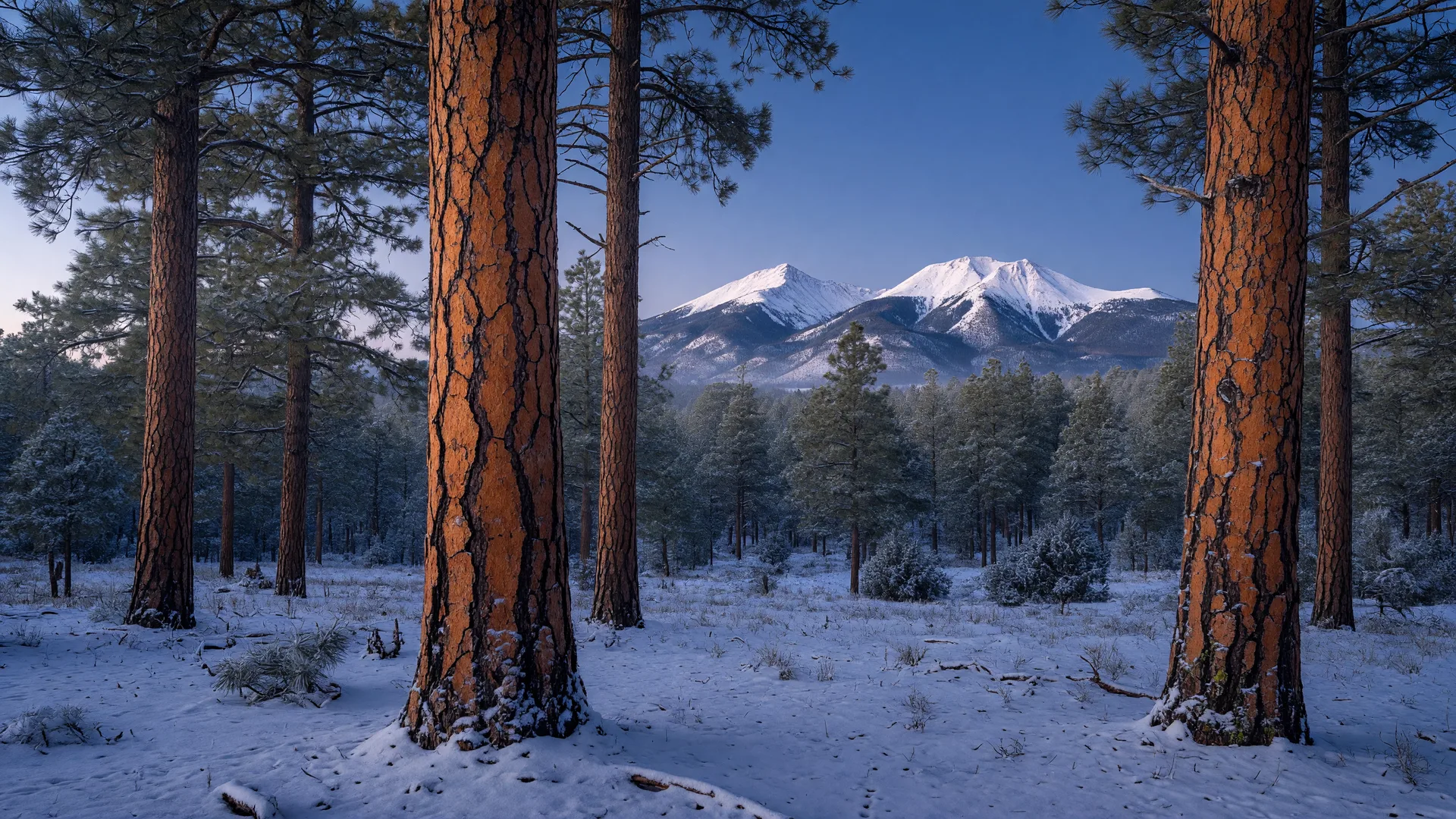
Doney Park is an unincorporated area roughly 7 to 10 miles northeast of downtown along US 89, known for wide lots, sweeping views of the San Francisco Peaks, and a true rural feel, with many areas carrying no mandatory HOA. The trade-off versus living in Flagstaff proper: Doney Park is served by county roads and parcel-specific utilities (water from the Doney Park district or a private well, sewer often septic, private trash hauling), while inside the city you get municipal water, sewer, trash service, and plowed streets. If you want acreage and a country pace with a 15- to 20-minute commute to town, Doney Park is the classic choice.
Quiet, wooded community roughly 8-10 miles south via I-17, near the 89A junction to Sedona. Forested lots and dark skies.
Small community south of Flagstaff along I-17 bordering Kachina Village and the national forest, with varied lot sizes and a laid-back feel.
About 10-11 miles west on I-40 at 7,132 feet. Rural Route 66 roots and generally more affordable homes around the interchange.
About 20 miles south on I-17. Long a second-home and cabin community among the pines, with a quiet seasonal rhythm.
About 19-20 miles west on the old Route 66 corridor between Bellemont and Williams. Scattered forest parcels, maximum privacy.
The corridor north of town along US 180 toward Arizona Snowbowl and the Grand Canyon. Forest homes at the base of the Peaks.
About 33-34 miles west on I-40. Historic Route 66 town, Grand Canyon Railway, tourism economy, and generally lower prices.
Williams is worth a closer look for buyers who want Route 66 character and lower prices without leaving the region. It is the last Historic Route 66 town before the Grand Canyon, home of the Grand Canyon Railway, and about a 35- to 40-minute drive from Flagstaff on I-40. The local economy leans on tourism, so hospitality, retail, and owner-user commercial space anchor the market, including Mike's current downtown Williams mixed-use listing on the listings page.
Distances: Bellemont about 10-11 miles west, Parks about 19-20 miles west, Munds Park about 20 miles south, Williams about 33-34 miles west, per local mapping sources, accessed September 10, 2026.
What people search
Flagstaff Unified School District (FUSD) runs about 10 elementary schools, middle school options that include Mount Elden (the former Flagstaff Middle School site is being rebuilt as a new Marshall Elementary), and three high schools: Coconino High School, Flagstaff High School, and Summit High School. The district includes magnet and bilingual programs such as Kinsey Inquiry and Discovery and Puente de Hozho. A strong charter sector adds variety: BASIS Flagstaff, Flagstaff Arts and Leadership Academy, Northland Preparatory Academy, Pine Forest School, and The PEAK School, among others. For higher education, Northern Arizona University anchors the city.
School boundaries matter when you buy, so confirm the assigned school for any address you are considering. See the neighborhood guides for area character, or ask Mike for the boundary details on a specific property.
Sources: Flagstaff Unified School District school list (fusd1.org) and Arizona charter school directories, accessed September 10, 2026.
Choices range from FUSD's FACTS before- and after-school and preschool programs and NACOG Head Start to licensed private centers, Montessori schools, and bilingual programs. Demand at many centers is high, so begin the search months ahead and confirm each provider's current Arizona license.
Sources: fusd1.org FACTS, NACOG, Winnie/Care.com listings, accessed September 10, 2026.
Flagstaff Medical Center is the city's full-service hospital and the only Level 1 trauma center north of Phoenix. North Country HealthCare runs multiple community health centers for primary care, and urgent care clinics handle walk-in needs.
Sources: Northern Arizona Healthcare (nahealth.com) and North Country HealthCare, accessed September 10, 2026.
Optimum cable covers the most addresses (up to about 940 Mbps), Quantum Fiber and CenturyLink fiber serve many areas, Wecom Fiber is expanding citywide gigabit fiber, and 5G home and Starlink options cover the rest. Check your exact address, since availability varies street by street.
Sources: CNET and HighSpeedInternet.com Flagstaff roundups, accessed September 10, 2026.
Within the city: Arizona Public Service (APS) for electricity, UniSource Energy Services for natural gas, and the City of Flagstaff for water, sewer, and trash and recycling. Outside the city, water and sewer are parcel-specific (districts such as Doney Park Water, Kachina Village Utilities, Ponderosa Utility, or Munds Park), so verify every address.
Sources: Choose Flagstaff utilities guide, APS, UniSource, and City of Flagstaff, accessed September 10, 2026.
Life Beyond the Move
Flagstaff's calendar fills fast: farmers markets and ArtWalk downtown, the Coconino County Fair, the Flagstaff Festival of Science, and the Flagstaff Star Party under dark skies. Explore the things to do in Northern Arizona guide, find your new regular table in our dining guide, and keep up with what is happening each week on the Flagstaff events page.
And when you are ready to buy, sell, or lease anywhere in Flagstaff or Northern Arizona, Mike Konefal and the Flagstaff Property Experts team will handle it start to finish, from budget to closing.
About this guide
Written and maintained by Mike Konefal, Broker Associate with Coldwell Banker Northland and a Flagstaff resident since 1989. Figures are cited to their sources with access dates; volatile data points link to our Flagstaff market report for current numbers. Last updated September 10, 2026. Want the guide applied to your specific situation? Contact Mike or call 928-853-3810.