September 18, 2026
Why Commercial Investors Are Watching Williams, Arizona
Grand Canyon tourism, preserved Route 66 storefronts, and new hotel investment are turning Williams into one of the most interesting commercial markets in Northern Arizona.
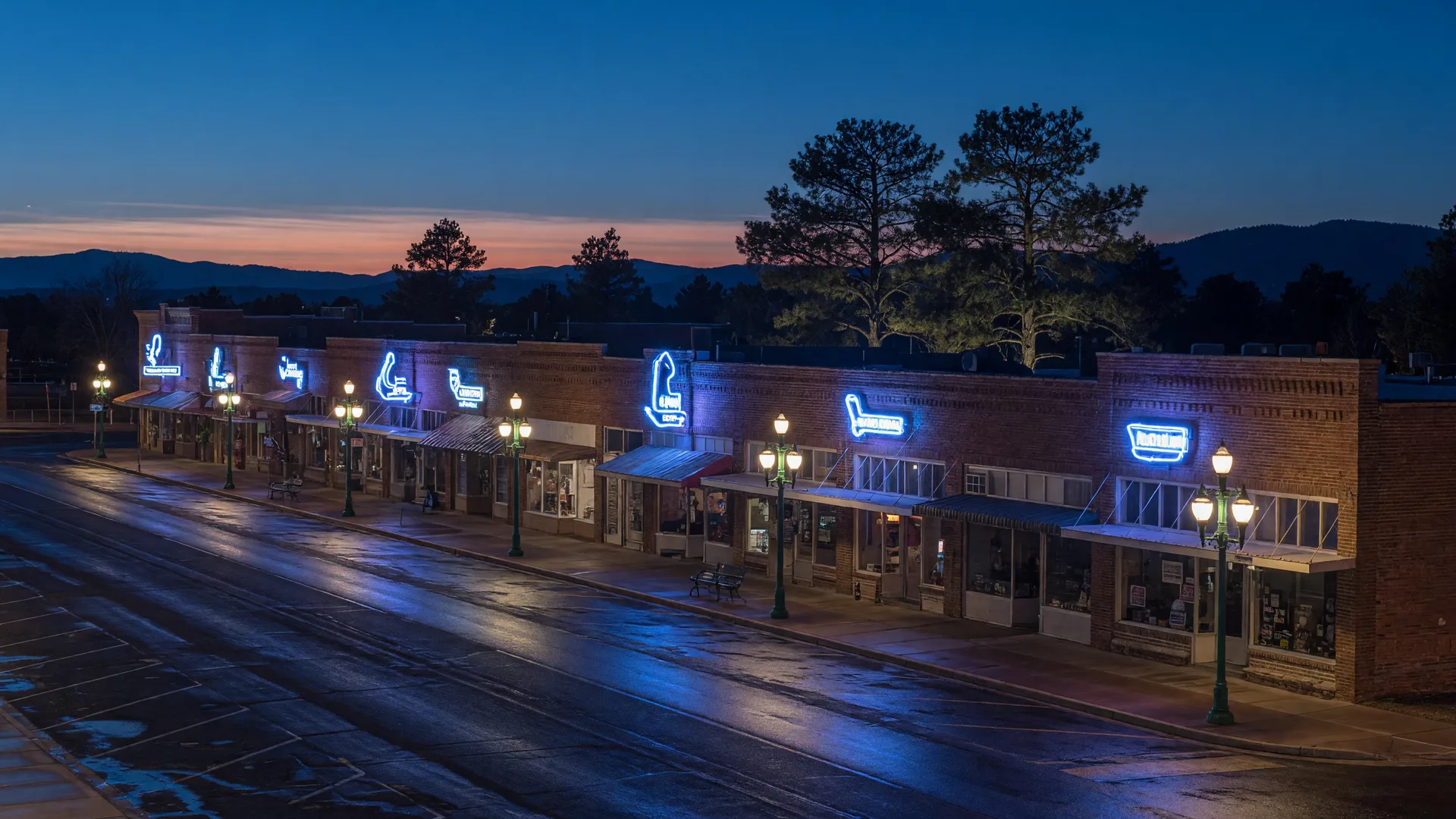
Williams, about 30 miles west of Flagstaff on Interstate 40, is the commercial market in Northern Arizona worth watching right now. Its economy is anchored by Grand Canyon tourism and Historic Route 66 traffic, and fresh private investment is raising the profile of its downtown commercial property. This post lays out the sourced demand picture and what it means for buyers, owner-users, and investors.
A gateway economy anchored by the Grand Canyon
Williams has long billed itself as the gateway to the Grand Canyon, and the numbers back it up. Grand Canyon National Park drew 4.9 million visitors in 2024, according to a National Park Service economic report highlighted by the Grand Canyon Trust, and Williams is one of the gateway towns whose economy is built on that traffic. Tourism guides estimate roughly 5 million travelers pass through Williams each year on the way to the canyon, with other estimates running closer to 3 million.
The town's tourism engine is the Grand Canyon Railway. The Santa Fe Railroad extended its line from Williams to the South Rim in 1901, and today the vintage railway runs daily from its 1908 depot about 60 miles to the canyon, a ride of roughly two hours each way. Ridership is commonly cited at more than 225,000 passengers a year, about 7 percent of South Rim visitation, and some 2026 reviews put the figure above 250,000. Rail passengers arrive and depart steps from the downtown commercial core, which makes depot-adjacent retail, dining, and parking-serving property some of the most location-sensitive commercial real estate in the region.
Historic Route 66 as a commercial asset
Route 66 heritage is not just a marketing line in Williams; it is a legally protected, commercially valuable asset. Williams was the last town on Route 66 to be bypassed by an interstate when I-40 opened in October 1984, and its Main Street, Bill Williams Avenue, remains one of the best-preserved stretches of the historic highway. The six-block Historic Business District, known as "Urban Route 66," was listed on the National Register of Historic Places on May 19, 1989, and is lined with brick storefronts, vintage motels, and neon signs.
That heritage is being actively maintained and reinvested in. In late 2025, $35,000 in grants was awarded to restore three iconic Route 66 neon signs: the Turquoise Teepee, the Canyon Club, and the World Famous Sultana Bar. Restoration by Northern Arizona Sign was completed in April 2026, and a public lighting ceremony was held on May 1, 2026. For commercial buyers, the takeaway is that the corridor's character is a planned, funded amenity rather than an accident of age, and character is what drives Route 66 foot traffic.
New capital is arriving in Williams
The market signals for investors go beyond visitor counts. In March 2025, the 96-room Trailborn Grand Canyon hotel opened at 642 E Route 66 on a site that has hosted lodging for more than 90 years, adding a full-service, design-forward property with a Southwestern grill to the town's overnight stock. Earlier that year, Canyon Donuts opened in January 2025 at 420 W Route 66, a signal that small owner-operators still see the corridor as a viable retail location.
Compounding tourism growth with redevelopment, Williams now combines a stable gateway economy, a protected historic district, and proof of investor appetite in the form of a new branded hotel. That combination is rare among small mountain towns in Northern Arizona, and it is exactly what draws commercial capital to markets that feel pre-revitalization rather than post-peak.
What this means for commercial buyers and investors
Every commercial market has a buyer profile, and Williams serves several. A few that come up most often in practice:
- Owner-users: retailers, restaurateurs, and service businesses that want a storefront on a worked corridor with established foot traffic. Route 66 visibility plus Grand Canyon Railway passenger flow makes Williams one of the few small-town retail markets in Arizona with year-round tourist demand.
- Hospitality investors: the town's motel and lodging stock, much of it vintage and owner-operated, offers a path into a proven tourism economy, and the arrival of Trailborn shows the market can support new, professionally operated rooms.
- Portfolio buyers: mixed-use and downtown income property that combines commercial below with residential above, the classic Williams downtown ownership model, attracts investors looking for tourism-tied cash flow and a defensible long-term asset.
- 1031 and relocation buyers: sellers stepping out of larger markets often look for a smaller, manageable commercial purchase with a clear story, and Williams offers that in a way few other Route 66 towns can match.
As with any small-market investment, due diligence matters more than momentum. Understand the building's condition and systems, the lease structure if it is income-producing, parking and access for both guest and local traffic, and the specific zoning and historic-district rules that apply before you make an offer. Tourism dependence is a strength in Williams, but it should be underwriting, not a substitute for underwriting.
Mike Konefal represents commercial property in Williams and the Route 66 corridor and currently has a downtown Williams mixed-use acquisition opportunity available for investors and owner-users. You can see what is active on the Listings page, read the Williams commercial market guide, or review the Williams investment property overview for the full picture.
The bottom line
Williams pairs a preserved main street with a stable, growing tourism engine and observable new investment. Grand Canyon visitation of 4.9 million in 2024, railway ridership above 225,000 passengers a year, a funded neon-sign restoration program, and a new 96-room hotel all point the same direction: the market is being built up, not run down. For commercial buyers who can do the diligence, that is often the most interesting time to look.
Market conditions change and every property is different. If you would like to talk through a Williams or Route 66 commercial purchase, investment, or lease, Mike Konefal is happy to help.
Sources
- Grand Canyon Trust, "Grand Canyon Tourism Fuels Arizona's Economy" (grandcanyontrust.org)
- GrandCanyon.com, "Williams Arizona Guide: 12 Best Things to Do" (grandcanyon.com)
- Arizona Republic, "Near Grand Canyon, Williams AZ shines with Route 66 history" (August 2025) (azcentral.com)
- Arizona Republic, "Grand Canyon Railway: How to ride Arizona's scenic train" (January 2025) (azcentral.com)
- Xanterra Travel Collection, Grand Canyon Railway Partnership Fact Sheet (thetrain.com)
- Wikipedia, "Grand Canyon Railway" (wikipedia.org)
- Route 66 News, "Hotel company Trailborn opens location in Williams" (March 2025) (route66news.com)
- Route 66 News, "Three classic neon signs in Williams receive $35,000 in grants for restoration" (November 2025) (route66news.com)
- Signals AZ, "Williams to Light Restored Route 66 Neon Signs" (2026) (signalsaz.com)
Visitor, ridership, and population figures reflect the most recent published data at the time of writing and can change with new reporting. Figures are provided for information only, not as a guarantee of future performance.

Mike Konefal
Commercial Real Estate Agent · Coldwell Banker Northland Realty
Questions about a Williams, Route 66, or Flagstaff commercial property? Contact Mike for a conversation about your situation.
Contact Mike Konefal