October 14, 2026
Flagstaff Winter 2026-27: Snow, El Niño, and Getting Your Home Ready
Flagstaff's first measurable snow averages around November 9, the city typically measures 90 to 95 inches of snow a season, and NOAA's October outlook points to a strong El Niño winter. Here is what to expect and how to prepare.
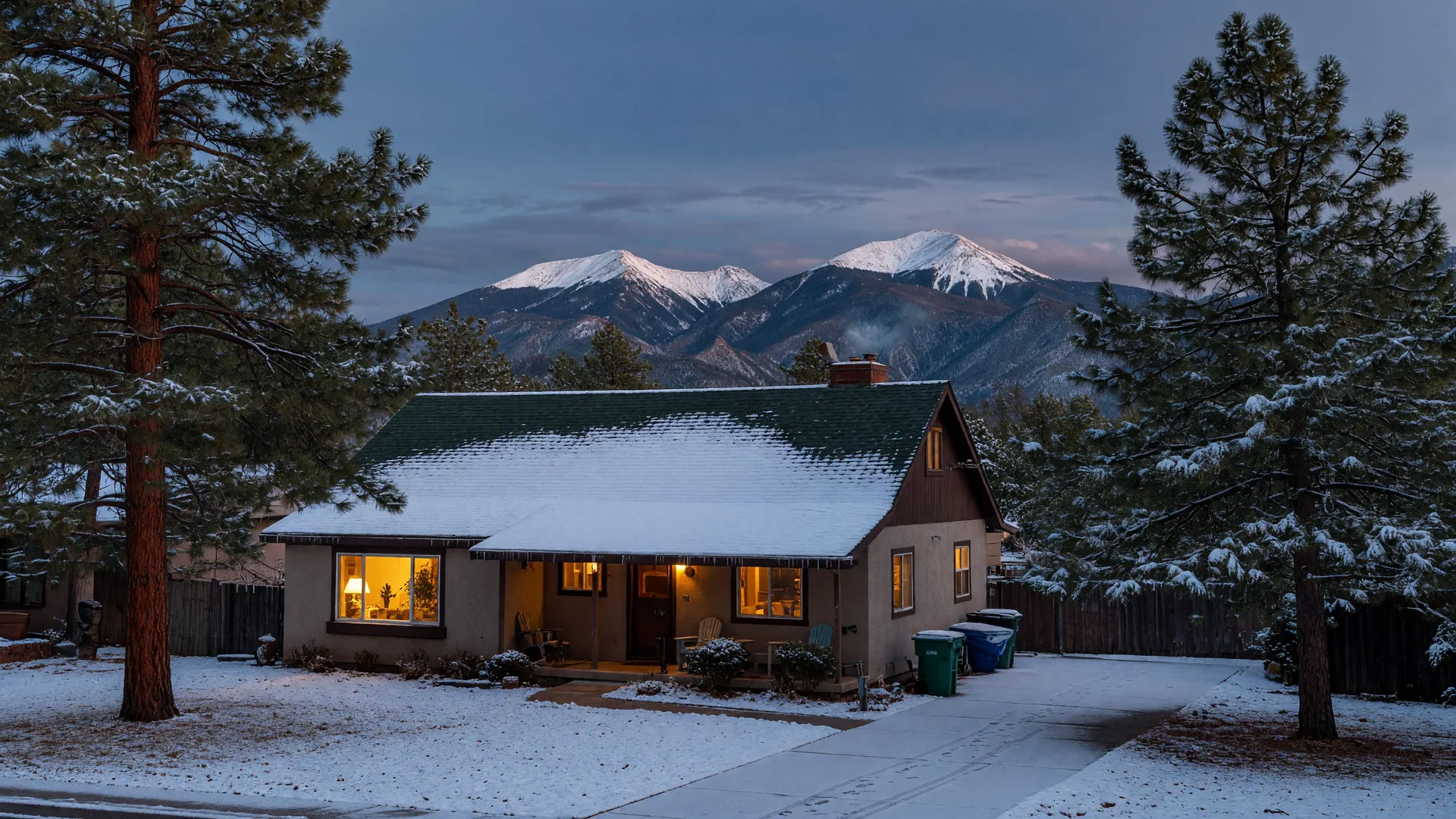
Winter is the season Flagstaff is built for. At roughly 6,910 feet in elevation, the city is one of the snowiest in the United States, averaging 90 to 95 inches of snow per season, and the first measurable snow of the year typically arrives in early November. This guide covers the timing of first snow, what the winter 2026-27 outlook from NOAA and Arizona forecasters says, a practical home preparation checklist, and how the season shapes the Flagstaff real estate market for buyers, sellers, and commercial property owners. All weather figures come from published climate records and forecasts active in October 2026.
When Flagstaff gets its first snow
Based on climate records kept since 1898, the median date for Flagstaff's first measurable snow of the season is around November 9, and the average first snowfall of one inch or more falls around November 20. Some years are much earlier: the earliest first snow on record was September 19, 1965. Other years the first snow holds off until December or even January. In other words, a mid-October snow is not impossible, but the historical odds say the season typically begins in the first half of November.
Once winter settles in, it stays. Flagstaff averages roughly 90 to 95 inches of snow per season, and December alone averages about 19 inches. That is the context for every home purchase here: snow is not a rare event to plan around, it is a routine part of owning property in Northern Arizona, and the homes that handle it best are the ones prepared before the first storm.
What the winter 2026-27 outlook says
The dominant driver for this winter is El Niño. NOAA's Climate Prediction Center, in its October 8, 2026 ENSO advisory, reported that El Niño conditions are strengthening and are likely to reach strong-to-very-strong levels through January through March 2027. NOAA's seasonal outlook for December 2026 through February 2027 places Arizona in the above-normal precipitation probability zone, which is consistent with the wetter-than-normal winters that strong El Niño events have historically brought to the Southwest.
Arizona forecasters following the same signals project a slower start to the season, with more rain and mountain snow arriving from December 2026 through March 2027. A fair caveat applies to every long-range seasonal outlook: these are probabilities, not specific snowfall totals, and actual accumulation can differ from the forecast. For homeowners and buyers, the practical takeaway is the same either way, prepare as if a normal Flagstaff winter is coming, and treat the wetter outlook as a reason to take roof, gutter, and drainage prep seriously.
A practical home prep checklist for Flagstaff
The work that matters most is done before the first storm, not during it. Here is the checklist that applies to most Flagstaff homes:
- Clear roofs and gutters of pine needles: Flagstaff's ponderosa pines drop needles all year, and clogged gutters and roof valleys are the most common cause of ice dams and indoor leaks in this market. Clean them before the first heavy snow, and again after big wind events.
- Service the heating system: Have the furnace or boiler inspected and filters replaced before the first cold snap. At Flagstaff's elevation, a mid-winter heating failure is not just uncomfortable, it can threaten pipes and create an emergency repair at premium prices.
- Test carbon monoxide and smoke detectors: Gas heat and wood stoves are common here, and snow can block vents. Replace batteries and confirm detectors are current before the season's first long cold stretch.
- Protect plumbing: Insulate exposed pipes in crawl spaces and garages, know where the main shutoff valve is, and winterize outdoor spigots and irrigation before freezing temperatures arrive.
- Seal the envelope: Weatherstripping around doors, door sweeps, and window seals cut heating bills and keep snow melt from working its way inside. It is a low-cost job that pays all winter.
- Trim branches over the roof: Heavy, wet snow can bring down ponderosa branches onto roofs, cars, and power lines. Trim overhanging limbs before they are loaded with snow.
- Stock snow gear early: A snow shovel or snow blower, ice melt, and an emergency kit for the car are worth buying in October, when shelves are full, rather than the morning of the first storm.
- Check the chimney: If the home has a wood-burning fireplace or stove, have the chimney cleaned and inspected before use. Creosote buildup is a real fire risk in a long burning season.
What winter means for the Flagstaff market
Winter changes how the market moves, even though the fundamentals stay intact. Showings slow in the weeks around the holidays, but the buyers who are out in January and February tend to be serious, and a home that shows well in winter, with a cleared driveway, dry walkways, and warm interior, stands out sharply against the competition. The current market data reinforces why preparation matters. Redfin's data for the three months ending August 2026 put Flagstaff's median sale price near $700,000, roughly flat year over year, while Resideline's September 2026 tracker reports a median sold price near $660,750 across 544 closed sales over the trailing six months. Stacker's mid-year review put the median sale price at $682,889, down about 2.1 percent year over year, with roughly 759 active listings and about 4.9 months of supply. Median days on market ran near 59 days in the spring and mid-year readings. The picture is a firm price level, more inventory than a few years ago, and homes staying on the market longer, which is exactly the environment where a well-prepared, well-priced home wins.
For buyers, winter is a legitimate opportunity. Less competition and longer marketing times can mean more negotiating room, and a winter inspection is a stress test: you see the roof under snow load, you learn how the heating system performs, and you can ask direct questions about snow removal responsibility, roof age, and insulation before you commit. For sellers, the winter checklist is the marketing plan: clear the driveway and walks before every showing, keep entryways dry and safe, and let natural light do the work on gray days.
The commercial side of winter
For commercial property, winter is a test of operations as much as maintenance. Retail and office tenants expect a snow removal plan that covers parking lots and walkways before business hours, and a property that fails that test loses tenants and customers. Roof snow load is a structural concern on flat and low-slope commercial roofs, and drainage and ice management around entries matter for liability as much as comfort. Landlords and owners who put snow removal contracts, parking lot maintenance, and roof inspections in place before the first storm protect both the property and the tenant relationship, which is why lease renewals and winter performance so often go together in this market.
Winter also does not stop Northern Arizona's tourism economy. The Grand Canyon Railway runs year-round out of Williams, and winter visitors keep Route 66 businesses, lodging, and restaurants in Flagstaff and Williams active through the season. For commercial owners in the tourism corridor, that means winter is not a shutdown, it is a different operating season with its own staffing, maintenance, and marketing rhythm.
Why the market's fundamentals hold through winter
The forces that shape Flagstaff real estate do not pause for snow. Northern Arizona University reported a fall 2026 headcount of 25,410 students, including 21,281 undergraduates, and a widely cited 2015 study from the Arizona Rural Policy Institute estimated NAU contributes about $1.85 billion in economic activity to Arizona each year while supporting roughly 20,300 jobs. University-driven demand, year-round tourism, and limited inventory keep the market active even in the quietest weeks of the calendar, which is why winter listings here are rarely a sign of distress, and why prepared buyers and sellers can both find advantage in the season.
The bottom line
Flagstaff's first snow typically arrives around November 9, the city averages 90 to 95 inches of snow a season, and this winter's strong El Niño outlook tilts toward a wetter-than-normal season from December through March. The homes and commercial properties that come through winter best are the ones prepared before the first storm: clean roofs and gutters, serviced heating, protected plumbing, and a snow removal plan in place. For buyers, winter offers less competition and a real inspection of how a property handles the season. For sellers, winter preparation is the marketing plan.
Every property is different, and winter preparation questions are exactly the kind of thing worth walking through with someone who knows the market. If you are buying, selling, or preparing a commercial property in Flagstaff or Northern Arizona for the season, Mike Konefal is happy to help. For the latest published market numbers, the Flagstaff market report on this site tracks price and inventory data, and last month's fall aspen guide covers how autumn leads into the snow season here.
Sources
- NOAA Climate Prediction Center, "ENSO Diagnostic Discussion" (October 8, 2026) (cpc.ncep.noaa.gov)
- NOAA 2026-2027 Winter Forecast summary, including the December 2026 through February 2027 precipitation outlook (opensnow.com)
- Arizona Weatherman, "Arizona's Winter 2026-27 Outlook: A Slower Start, Then More Rain and Mountain Snow" (arizonaweatherman.substack.com)
- mywild.report, "First Snow in Arizona: Typical Dates and Records" (mywild.report)
- Extreme Weather Watch, "Earliest and Latest Snowfalls in Flagstaff History" (extremeweatherwatch.com)
- azcentral, "When does it snow in Flagstaff? It might arrive earlier than you think" (azcentral.com)
- Redfin, "2026 Flagstaff Housing Market" (redfin.com)
- Stacker, "Flagstaff mid-year housing market review (2026)" (stacker.com)
- Resideline, "Flagstaff, AZ Housing Market 2026" (September 2026 update) (resideline.com)
- Federal Reserve Bank of St. Louis (FRED), "Median Days on Market, Flagstaff, AZ (CBSA)" (fred.stlouisfed.org)
- NAU Institutional Research, "Quick Facts" (Fall 2026 enrollment, 21-day census) (in.nau.edu)
- Arizona Daily Sun, "NAU census shows 6.5% drop in enrollment" (archive.ph)
- Arizona Rural Policy Institute / NAU Alliance Bank Outreach Center, "The Economic Contributions of Northern Arizona University" (2015) (in.nau.edu)
Weather forecasts and market figures change frequently, and sources differ in methodology and timing. Seasonal outlooks are probabilities, not guarantees of specific snowfall. Figures above reflect the most recent published data at the time of writing and are provided for information only, not as a quote, an appraisal, or a guarantee.

Mike Konefal
Commercial Real Estate Agent · Coldwell Banker Northland Realty
Questions about buying, selling, or preparing a property for Flagstaff's winter season? Contact Mike for a conversation about your situation.
Contact Mike Konefal