October 23, 2026
Flagstaff Winter 2026-27: What the Snow Economy Means for Commercial Real Estate
Winter is Flagstaff's defining economic season, and last year's low snow showed how quickly the city feels it. Here is what the 2026-27 outlook, Snowbowl's opening, and a strong El Niño forecast mean for commercial property.
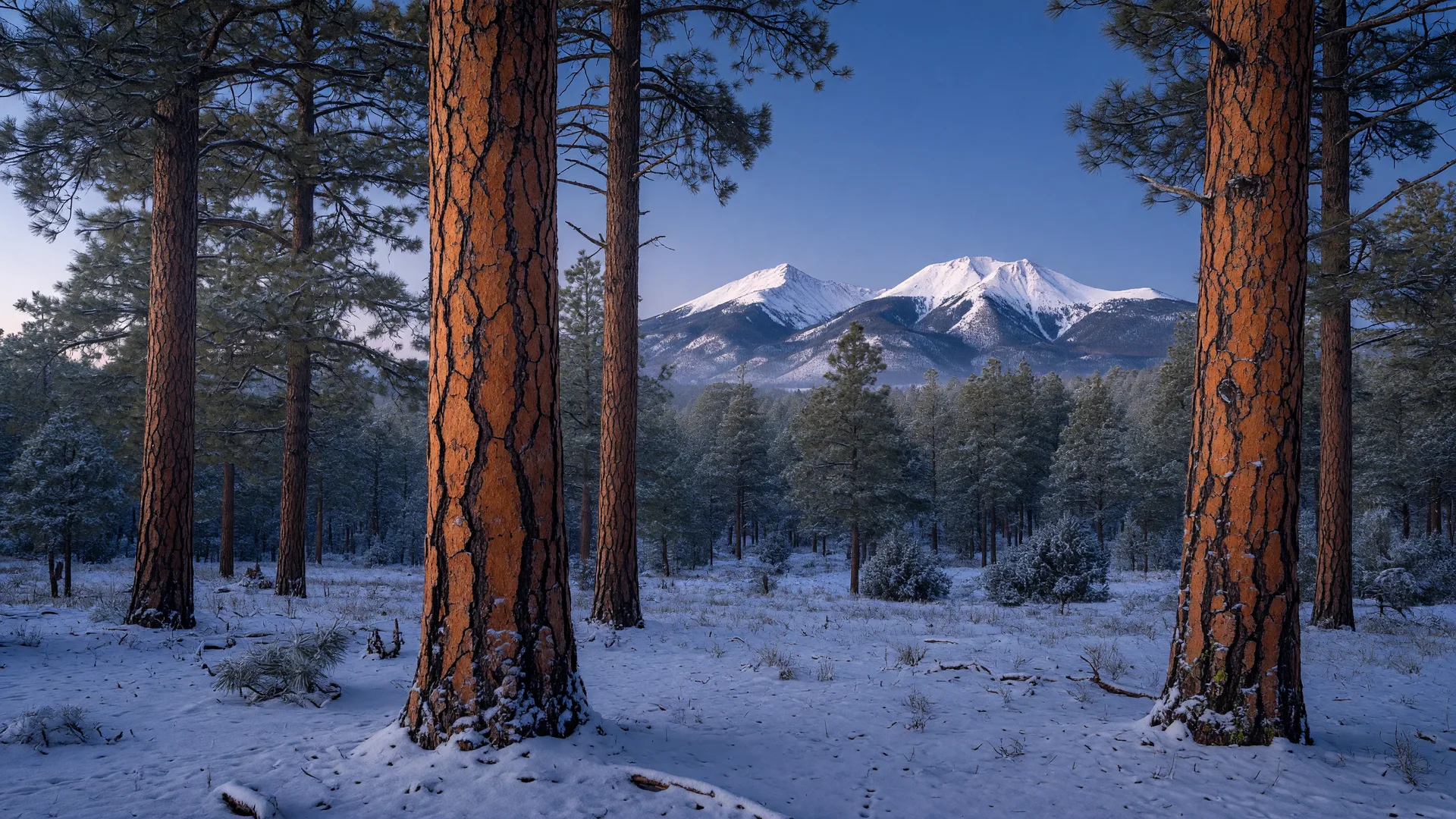
Winter is the season Flagstaff's economy is built around. Tourism is the city's largest industry, drawing about 5 million visitors a year, and snow-related spending alone is estimated at roughly $20 million annually. Last winter's unusually low snowfall squeezed that economy, and the setup for 2026-27 is sharply different, with a strong El Niño forecast favoring a wetter winter and Arizona Snowbowl scheduled to open November 20. This post covers what the season means for commercial property owners, investors, and tenants across Flagstaff and Northern Arizona, and why snow belongs in the underwriting. All figures come from published sources, current NOAA outlooks, and resort and city announcements active in late October 2026.
Why winter matters to Flagstaff's economy
Flagstaff is one of the snowiest cities in the United States. Recent climate estimates put the city's average near 90 inches of snow a year, with longer-term records that have run around 100 inches, earned from elevation near 7,000 feet and orographic lift over the San Francisco Peaks. That snow is not scenery; it is infrastructure. Tourism is Flagstaff's No. 1 industry, bringing in roughly $565 million in annual revenue and supporting about 8,000 local jobs, close to one-tenth of the city's population, according to Discover Flagstaff's economic reporting. Within that, an NAU study estimates that snow tourism, meaning skiing, sledding, and snowplay, contributes almost $20 million a year.
Arizona Snowbowl is the anchor of that winter economy. The resort on the San Francisco Peaks averages about 260 inches of snow a year and hires roughly 500-plus seasonal workers each winter against about 70 year-round staff. Its record 2018-19 season drew around 300,000 visitors, and its 2024-25 season, running from November 8 to June 1, was the longest in Arizona history at 185 days. For commercial owners, the takeaway is straightforward: a large share of Flagstaff's visitor economy, and the retail, hospitality, and parking revenue that comes with it, is seasonal and weather dependent.
Last winter was a warning
The 2025-26 season was the flip side of that dependence. Flagstaff measured just 26.6 inches of snow through late March 2026, tied for its lowest on record, and by early January the season was already running about 20 inches below the normal pace. The effect showed up in the numbers: city tourism data put Flagstaff-area winter visitation down about 2 percent and monthly attractions visitation down 11.6 percent year over year through December 2025, and local reporting described winter tourism as a tougher sell for businesses that depend on it.
For anyone underwriting hospitality, retail, or short-term rental assets in Flagstaff, the 2025-26 season is the recent case study. A low-snow winter does not empty the town, but it measurably softens the shoulder of the year that carries many seasonal businesses, and it reminds owners how much of Flagstaff's demand is tied to the weather rather than to year-round employment or university enrollment. That is a risk to model, not an anomaly to assume away.
The 2026-27 outlook points the other way
NOAA's winter outlook, released October 15, 2026, is shaped by a strong-to-very-strong El Niño, with roughly an 80 percent chance of a very strong event peaking December through February. For Arizona, the outlook favors above-normal precipitation, and for Flagstaff specifically the seasonal outlooks favor above-normal precipitation totals with no favored temperature outcome. In practical terms, the forecast leans toward the kind of winter Flagstaff is known for, wetter than normal across the season.
Forecasts are probabilities, not guarantees, and last winter is the reminder that a season can run far below normal even after a promising start. But the directional signal matters for planning: the 2026-27 setup is the opposite of last year's, which is a meaningful input for seasonal staffing, snow-removal contracts, and revenue projections across the local commercial market.
Snowbowl is gearing up for a big season
Arizona Snowbowl is scheduled to open its 2026-27 season on Friday, November 20, weather and conditions permitting. The mountain recorded its first snowfall of the season on September 29, 2026, about two inches at the summit, and snowmaking began October 13. The resort has invested more than $1 million in enhancements ahead of opening, including a new beginner conveyor, snowmaking upgrades, and forest-health work for tree skiing, and it named a new general manager through Mountain Capital Partners who has said the resort is gearing up for a big winter. Early season marketing has leaned into the El Niño-boosted forecast.
The resort's hiring and investment are worth watching as a leading indicator for the wider commercial market. A strong season at Snowbowl pulls day-trippers and overnight visitors into Flagstaff, fills hotels and restaurants, and supports the retail and service businesses that anchor downtown and the Route 66 corridor. When the anchor of the winter economy is investing in capacity, that is a signal worth reading across the whole market.
What a snow season means for commercial real estate
Winter drives a measurable share of commercial demand in Flagstaff. Grand Canyon National Park, an hour and a half to the north, sees roughly 270,000 of its roughly 5 million annual visitors during the winter months, with the December holidays among the busiest times, and Flagstaff is the gateway for much of that travel. That seasonal visitor base supports hotel, retail, dining, and parking assets through the fourth and first quarters, a pattern that a strong snow year amplifies and a weak one dampens.
Development activity reflects continued confidence in the market. The proposed $55 million Graduate by Hilton Flagstaff at Beaver Street and Birch Avenue, on the former City Hall site at 19 W. Birch Avenue, is under city review with a planned opening in 2029, a significant new downtown hospitality project. On the financing side, Max Benjamin Partners secured a $74.8 million construction loan in October 2026 for an 83-unit multifamily property developed by Red Oak Development, a sign that lenders are still funding Flagstaff product. And in a nod to new commercial uses, the Flagstaff Planning and Zoning Commission discussed data-center regulation options in October 2026, a category of tenant whose revenue does not depend on snow at all.
For owners and investors, the operational side of winter matters as much as the revenue side. Snow removal is a fixed cost on commercial sites in Northern Arizona, seasonal staffing affects hospitality and retail operators, and weather-driven closures and slower January and February foot traffic belong in any realistic pro forma. Lease structures that acknowledge seasonality, whether through gross-up provisions, maintenance responsibilities, or realistic rent expectations for weather-sensitive tenants, are part of the standard for Flagstaff commercial property.
Practical takeaways for owners and investors
- Budget winter as a fixed operating cost: Snow removal, de-icing, and weather-related maintenance are annual line items on commercial sites in Flagstaff, not surprises. Confirm who carries the responsibility under your lease or purchase agreement before winter arrives.
- Underwrite seasonality explicitly: For hospitality, retail, and short-term rental assets, model a strong, average, and low-snow winter rather than a single figure. Last season is a real recent low case, and the current outlook supports a high case.
- Watch the leading indicators: Snowbowl's November 20 opening, its seasonal hiring, and early snowfall will tell you more about winter-quarter commercial activity than any forecast. A resort running full capacity is a proxy for the wider visitor economy.
- Position leases for seasonal tenants: Clear terms on maintenance, utilities, and rent relief for weather-sensitive operators reduce conflict in the slow months and protect the asset through the seasonal swing.
- Keep an eye on new supply and uses: The downtown hotel pipeline and new multifamily financing show the market's confidence, while data-center discussion hints at demand that is independent of weather. Diversified uses strengthen the overall commercial picture.
The bottom line
Last winter proved how quickly a low-snow season ripples through Flagstaff's tourism economy. The 2026-27 setup is the opposite: a strong El Niño forecast favoring a wetter winter, Snowbowl opening November 20 with fresh investment, and commercial development continuing in downtown and across the market. For owners and investors, winter is not a side note in Flagstaff; it is part of the underwriting. A season that delivers is a tailwind for hospitality, retail, and parking assets, and the signal to pay attention to starts with the first real snow.
Every commercial property has its own numbers, and weather is only one input. If you are evaluating a property, a lease, or an investment in Flagstaff or Northern Arizona, Mike Konefal is happy to walk through the seasonality, the market data, and what a realistic pro forma looks like. For the homeowner side of the same season, the earlier winter home prep guide covers first-snow timing and property preparation, and the Flagstaff market report tracks the latest published price and inventory data.
Sources
- NOAA, "El Niño looms large over U.S. Winter Outlook" (October 15, 2026) (noaa.gov)
- Discover Flagstaff, "Tourism Matters: Flagstaff's economy by the numbers" (flagstaffarizona.org)
- KJZZ, "Flagstaff received less snow this winter, making things tough for its tourism industry" (April 2026) (kjzz.org)
- AZFamily, "Unseasonably warm winter leaves Flagstaff 20 inches below normal snow levels" (January 2026) (azfamily.com)
- Arizona Snowbowl, "First Snow of the Season" and 2026-27 opening announcement (snowbowl.ski)
- Signals AZ, "Arizona Snowbowl Begins Snowmaking for 2026 Ski Season" (signalsaz.com)
- SnowBrains, "Arizona Snowbowl Announces Opening Day" (2026) (snowbrains.com)
- Flagstaff Business News, "New Arizona Snowbowl GM Gearing Up for a Big Winter" (flagstaffbusinessnews.com)
- Flagstaff Business News, "Peaks of Participation" (Snowbowl economic impact and season records) (flagstaffbusinessnews.com)
- Flagstaff Business News, "Developer Plans $55 Million Downtown Hotel" (October 10, 2026) (flagstaffbusinessnews.com)
- citybiz.co, "Max Benjamin Partners Secures $74.8 Million Loan for Multifamily in Flagstaff" (October 14, 2026) (citybiz.co)
- AZBEX, "Commercial Real Estate 10-20-26" (data-center regulation discussion) (azbex.com)
- National Park Service, "Grand Canyon Park Statistics" and "Visiting Grand Canyon During Winter" (nps.gov)
- World Atlas, "The Snowiest Cities in the United States" (worldatlas.com)
Weather forecasts, tourism data, and development plans change frequently, and sources differ in methodology and timing. Figures above reflect the most recent published data at the time of writing and are provided for information only, not as a quote, an appraisal, or a guarantee.

Mike Konefal
Commercial Real Estate Agent · Coldwell Banker Northland Realty
Questions about a Flagstaff or Northern Arizona commercial property, lease, or investment? Contact Mike for a conversation about your situation.
Contact Mike Konefal